
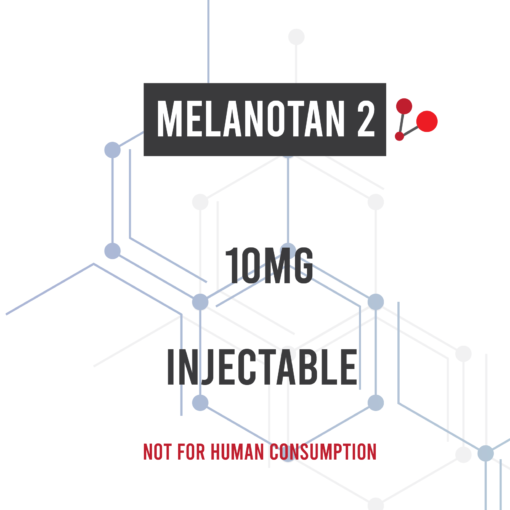

MELANOTAN II (MT) 10MG
Description
Melanotan II (often abbreviated as MT-2 or MT) is a synthetic cyclic peptide analog of the naturally occurring hormone alpha-melanocyte-stimulating hormone (α-MSH). A “10MG” label typically refers to the total lyophilized peptide quantity in a vial used in research or non-clinical contexts, rather than an approved or standardized medical dosing format.
Melanotan II is primarily known for its ability to activate melanocortin receptors, especially MC1R, MC3R, and MC4R. These receptors are involved in regulating pigmentation, appetite, sexual arousal pathways, and energy balance. Because of this broad receptor activity, Melanotan II has been widely studied in experimental settings for its effects on skin pigmentation and related physiological responses.
One of the most recognized effects associated with Melanotan II is stimulation of melanogenesis, the biological process responsible for melanin production in the skin. Activation of MC1R in melanocytes can lead to increased eumelanin synthesis, which results in darker pigmentation. This mechanism has made the peptide a subject of interest in research focused on UV protection pathways and pigmentation disorders.
In addition to pigmentation-related pathways, Melanotan II also interacts with melanocortin receptors in the central nervous system. Activation of MC4R in particular has been associated in research settings with changes in sexual arousal signaling and appetite regulation. These central effects distinguish Melanotan II from compounds that act only on peripheral tissues.
Melanotan II is typically studied in injectable form in laboratory environments due to its peptide structure, which would otherwise be broken down in the digestive system. Its pharmacological activity is characterized by relatively broad systemic effects because melanocortin receptors are distributed across multiple tissue types, including skin, brain, and endocrine-related pathways.
Commonly reported effects in experimental and anecdotal contexts include increased skin darkening, appetite suppression, facial flushing, nausea, and spontaneous flushing responses. These effects are generally linked to its action on melanocortin receptors and dose-dependent central nervous system activation.
It is important to note that Melanotan II is not an approved medication for medical or cosmetic use by major regulatory agencies such as the FDA or EMA. Its safety profile in humans is not fully established, and there are concerns in scientific literature regarding potential adverse effects, including pigmentation changes (such as new or darkened moles), gastrointestinal discomfort, and cardiovascular responses.
Because of these uncertainties, Melanotan II is classified as a research-use-only compound in most jurisdictions. There are no standardized clinical dosing guidelines, and its long-term effects in humans remain insufficiently studied.
In summary, Melanotan II (MT-2) 10MG is a synthetic melanocortin receptor agonist studied primarily for its effects on pigmentation, appetite, and central nervous system signaling. While it is widely discussed in experimental contexts, it remains an unapproved compound with incomplete safety and clinical validation data.
Be the first to review “MELANOTAN ll (MT) 10MG”
Related products
PEPTIDES

PEPTIDES
PEPTIDES

PEPTIDES
PEPTIDES

PEPTIDES

PEPTIDES

PEPTIDES
Reviews
There are no reviews yet.